
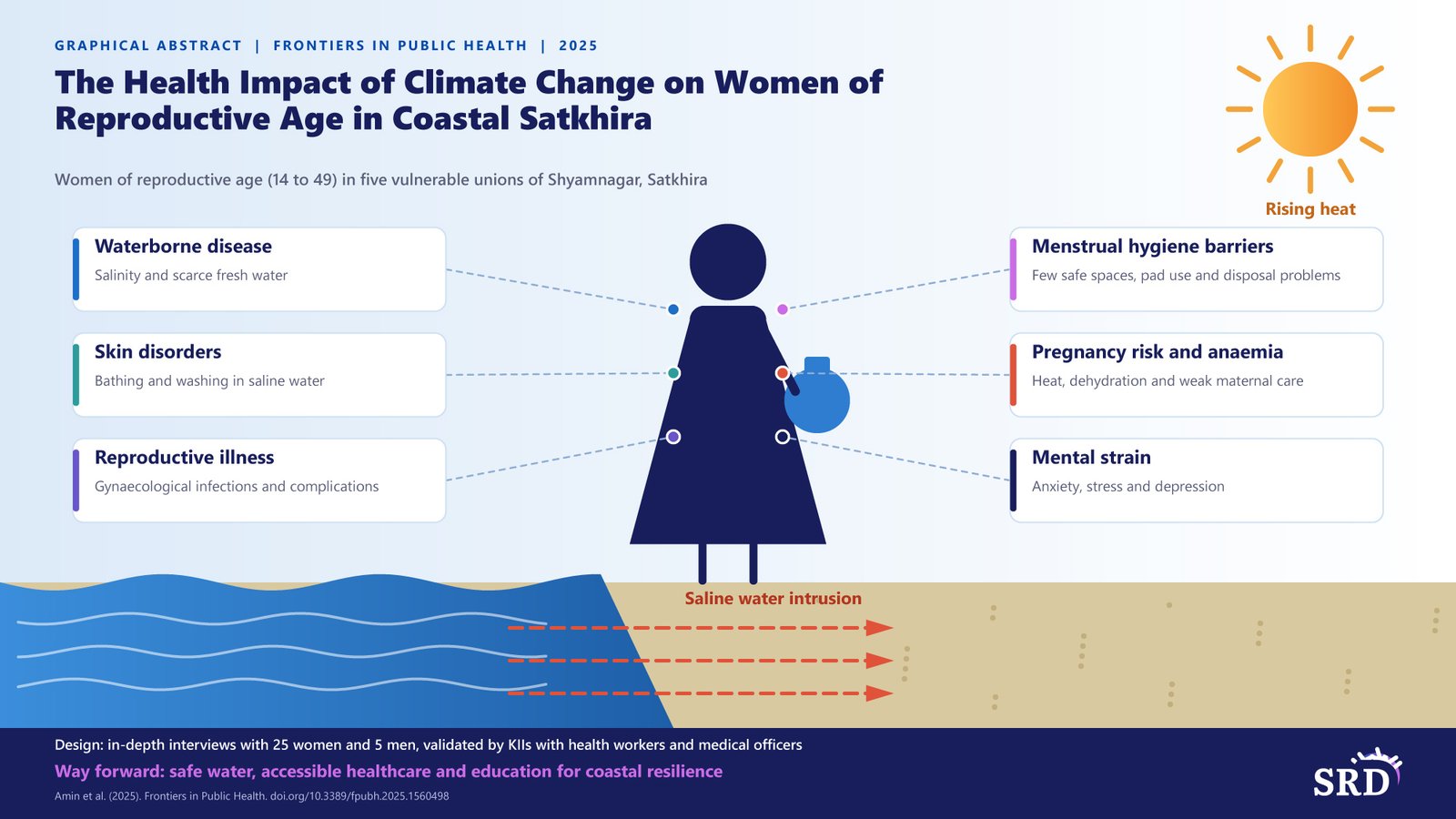
In the coastal villages of Shyamnagar, Satkhira, climate change is not a forecast. It is the salt in the pond, the long walk for drinking water and the summer heat that never seems to break. This study, led by Md. Noman Amin with colleagues from Gopalganj Science and Technology University, Rabindra University and Research and Integrated Thoughts Ltd., documents how these changes reach into the bodies and daily lives of women of reproductive age.
Why This Study Matters
Women in coastal Bangladesh carry much of the work of securing water, food and care for their households. When the environment changes, their health is affected both outdoors, where they collect water and work, and indoors, where they manage hygiene and family care. Yet their experiences are often missing from climate and health policy.
How The Study Was Done
After a literature survey to identify the most vulnerable coastal areas, the team selected five unions of Shyamnagar upazila. They conducted in-depth interviews with 25 women and 5 married men, and validated these accounts through key informant interviews with health workers and medical officers.
Key Findings
- Salinity and water scarcity expose women to waterborne disease, skin disorders and gynaecological and reproductive illness.
- Menstrual and maternal health suffer from limited hygiene facilities, difficulty managing sanitary products and weak access to maternal care.
- Summer heat adds risk: women report anaemia, pregnancy complications, heat stroke, dehydration and hypertension, alongside anxiety, stress and depression.
What It Means
The study points to gaps in awareness and prevention and calls for integrated responses that join environmental and health action. Safe water, accessible healthcare and education are presented not as separate services but as the foundations of resilience for coastal communities.