
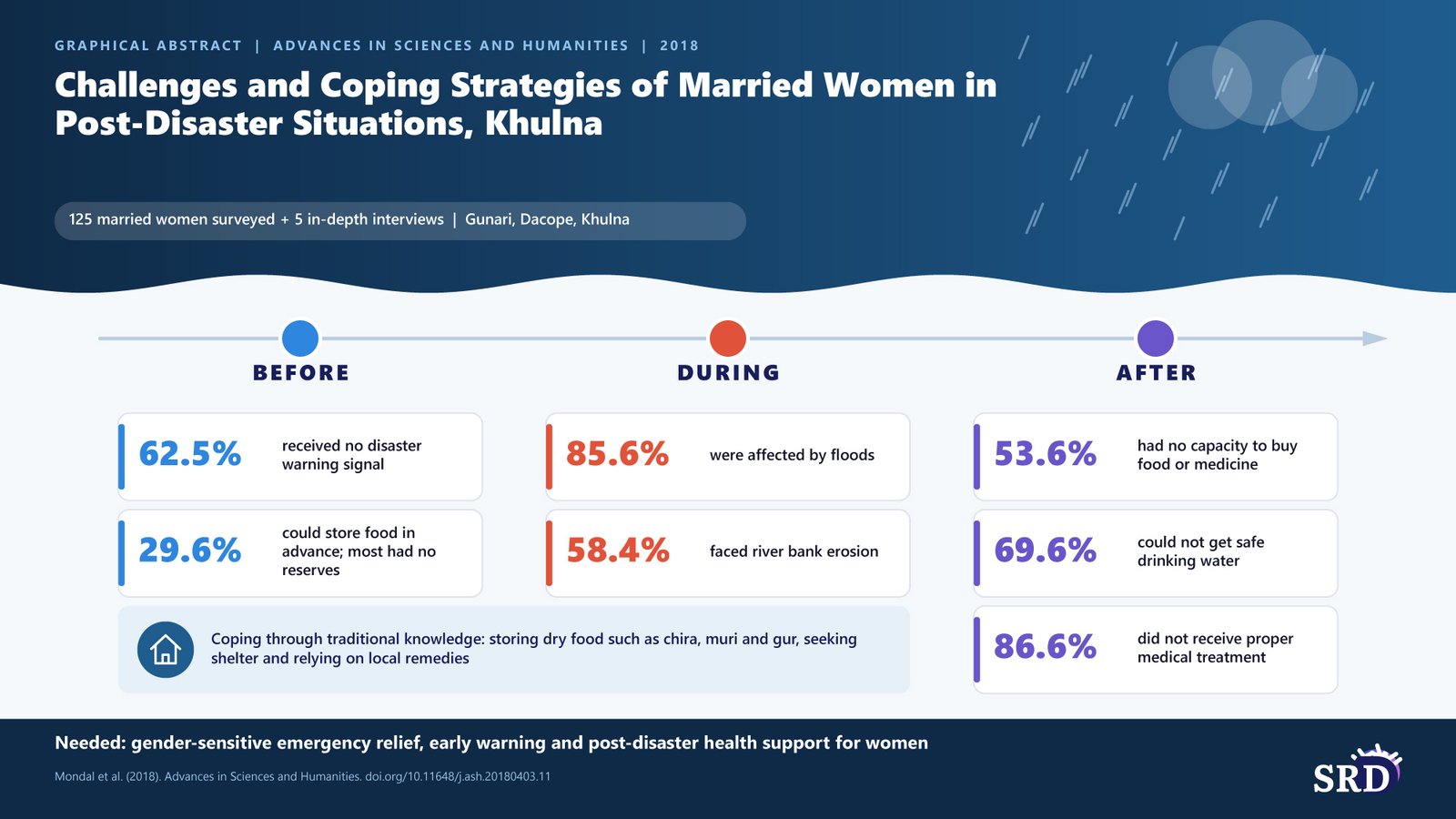
Floods, river erosion and cyclones are part of life in coastal Khulna. When disaster strikes, married women often carry the heaviest load: protecting children, keeping the household going and caring for the sick, while facing the same losses as everyone else. This study by Mithun Mondal, Md Abdur Rashid, Shimon Rahman and Md. Noman Amin examines their experience in Gunari, Dacope upazila.
Why This Study Matters
Gender relations shape who is most exposed in a crisis. Women’s weaker position in many households and communities makes them more vulnerable after disasters, yet relief systems rarely plan around their specific needs.
How The Study Was Done
The study used mixed methods: a questionnaire survey of 125 married women aged 20 to 60, and in-depth interviews with five women.
Key Findings
- Little warning: 62.5% did not receive any disaster warning signal.
- Few resources to recover: 53.6% had no capacity to buy food and medicine after a disaster, and 69.6% could not get safe drinking water.
- Health and safety risks: 86.6% did not receive proper medical treatment; diarrhoea and skin disease were common, and many reported harassment and violence.
- Coping relies on tradition: women used local knowledge, such as storing dry foods, to get through.
What It Means
The authors call for gender-sensitive emergency relief, better early warning and support for both the immediate and longer-term impacts of disasters, so that women in disaster-prone areas are less exposed.